OUR API

Build behavioural AI insights directly into your software.

Powered by industry-leading models and research.

EMPATHIC LEARNING
ENGINE (ELE)

Cineon’s ‘Empathic Learning Engine’ (ELE) is our proprietary AI architecture underpinning the only API that turns eye tracking and movement data into a measurement of cognition, emotion and performance.  

Elevate your software by making it adaptive and personalised to your users. Or, get objective, real-time feedback on attentional modes, cognitive states and competency metrics.  

Our API allows developers to seamlessly integrate our models into their own digital tools, whether that be XR, web apps or simulators.

Transform Data into Actionable Insights with ELE

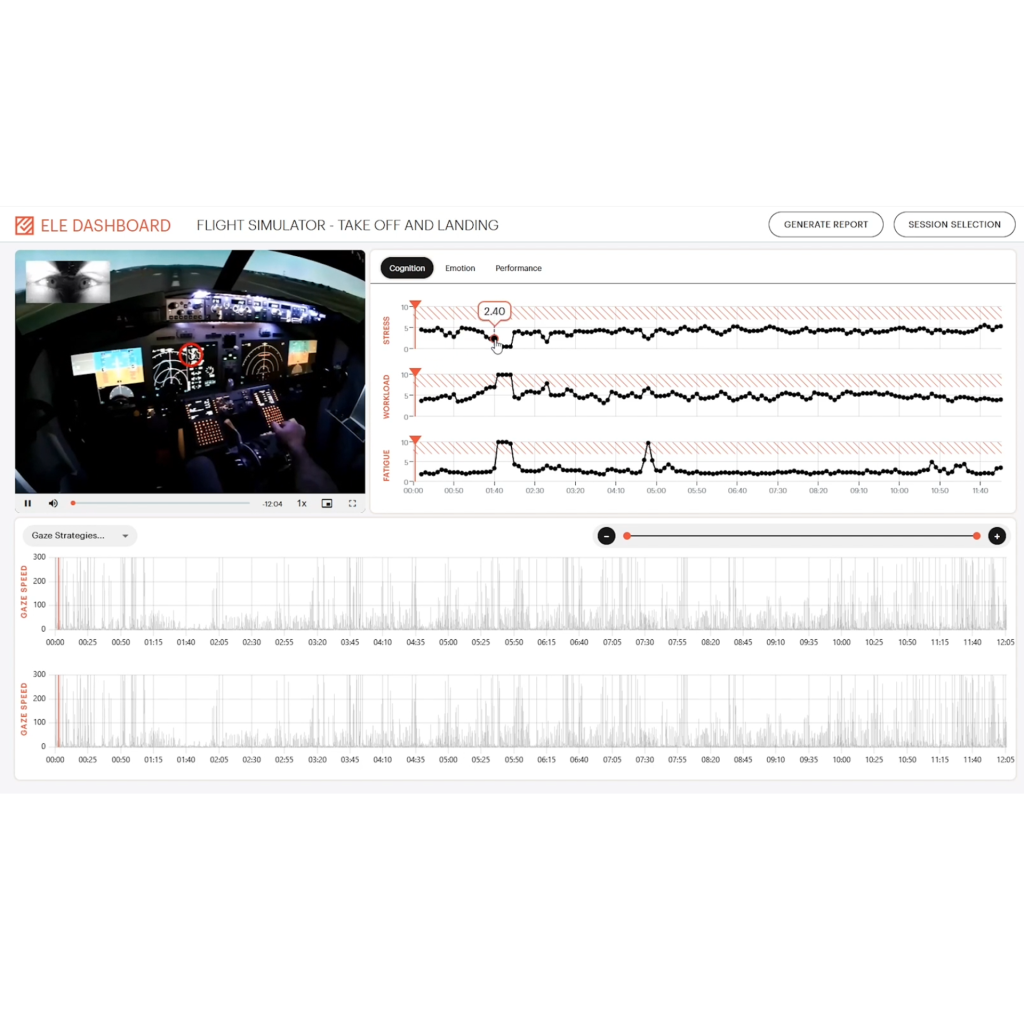
We believe data should be accessible to everyone. Insight is only as powerful as the way it’s presented. The ELE Dashboard transforms complex behavioural and physiological data into clear, actionable intelligence. In seconds, you can explore meaningful insights into your trainees, patients, or app users — without needing to be a data scientist. 

Whether you want to understand how a stressful moment affected someone’s performance or whether someone really noticed that hazard, ELE can turn raw data into understanding, and understanding into better decision making. 

Explore real-world dataset examples and see the impact for yourself.

LEARN, ADAPT, TRACK

Track, measure and understand gaze behaviour

Understand where someone was looking, and how they were taking in information.

Provide objective insight into cognition and performance

Provide objective feedback on the cognition and task competency of users, and visualise this in a dashboard for training reports.

Icon - Wave

Allow real-time personalisation of digital environments

Feed data back into your digital tools and adapt the environment based on how the user is feeling and behaving.

FEATURES OF ELE

SECTOR SPECIFIC FEATURES

While much of the strength of ELE lies in its ability to provide deep, yet generic, insight into performance related factors, we know that expertise is often task-specific and associated with techniques that have been developed from years of individual experience.  For this reason ELE contains context specific features, derived from cognitive task analyses undertaken on sector specialists. These include the auto identification of successful gaze strategies and eye movement techniques in pilots, industrial workers, special forces and mores.

USE CASES

TACET

Training Aircrew Competencies using Eye Tracking (TACET) offers immersive, cost-effective training environments

ISAVE

A virtual MRI experience that enables patients to gain familiarity with the MRI process

RCAT

Unique eye-tracking-based software to assist security forces training

INCORA

Software for training Infection, Contamination, and Radiation protection skills